
Play Plane Game Gambling Now!
Home → Auto Cashout
Plane Game Auto Cashout
Auto cashout in Plane Game
The auto cashout feature in Plane Game allows players to set a specific multiplier threshold before the round begins, ensuring an automatic exit when the animated plane reaches that value. This mechanism removes the need for manual reaction time during the rapid ascent of the multiplier, which starts at 1.00x and climbs exponentially until the crash point is randomly generated by the game engine. By pre-setting this limit, players can secure their winnings without relying on split-second decisions, effectively managing risk in a high-volatility environment where outcomes are determined by an exponential distribution.
Spribe designed this crash game with a theoretical Return to Player of 97.00%, meaning the house edge stands at 3.00% over a very long run of rounds. The auto cashout function does not alter this built-in mathematical advantage but rather helps players adhere to a disciplined strategy by locking in profits at predetermined levels. Since most rounds end at low multipliers due to the random generation process, using this tool prevents common mistakes like holding out for higher, less probable wins that often result in total loss.
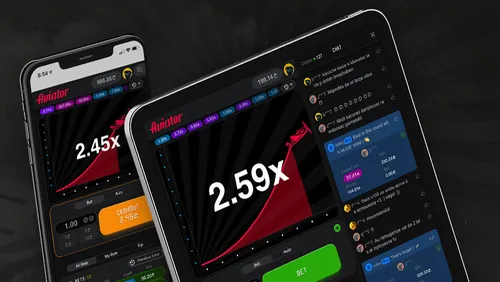
Setting a target multiplier
Players can configure the auto cashout parameter to trigger at any chosen multiplier value before the plane begins its ascent, allowing for precise control over potential payouts. For instance, setting a target of x2.00 means the system will automatically close the bet once the multiplier hits that exact number, securing a double return on the wagered amount. This flexibility enables users to tailor their risk profile, choosing between frequent small wins or rare large payouts, depending on their personal preference and bankroll management strategy within the game's framework.
One bet might be set to cash out early at a lower multiplier for steady gains, while the other could aim for a higher value, such as x10 or more, to chase larger rewards. This dual-bet structure enhances strategic depth, allowing players to balance safety and aggression within a single round, optimizing their approach to the random crash points generated each time.
In comparison to Aviator, another title by Spribe which shares a similar mechanic and also boasts a 97.00% RTP, Plane Game offers comparable flexibility in setting target multipliers. Both games utilize a multiplayer live bet feed where players can observe others' actions, but Plane Game's specific implementation allows for distinct auto-cashout settings per bet. Understanding these parameters is crucial, as the crash point is randomly generated each round, making it impossible to predict exactly when the plane will fly away, thus emphasizing the importance of pre-set limits.
Why automation removes hesitation
Hesitation is a significant factor in crash games like Plane Game, where the multiplier rises rapidly from 1.00x, potentially leading to impulsive decisions that result in missed exits or late cashouts. By automating the cashout process, players eliminate the emotional stress and reaction delays associated with manually clicking the button, ensuring that their predefined strategy is executed consistently regardless of the speed of the game. This consistency is vital in a high-volatility environment where the house edge of 3.00% can quickly erode funds if decisions are made under pressure or distraction.
The provably fair technology used in Plane Game ensures that each round's outcome is transparent and verifiable, adding a layer of trust to the automated execution of bets. When players use auto cashout, they rely on the game's algorithm to execute their instructions precisely, removing any doubt about whether they clicked fast enough. This reliability is particularly important given that the crash point is determined by an exponential distribution, meaning most rounds end early, and any delay in manual intervention could mean the difference between a profit and a loss.
While some players might prefer the thrill of manual play, the statistical reality of Plane Game favors those who automate their exits to maintain discipline and avoid emotional trading. The game's design, with its rising multiplier and random crash, creates a psychological trap where the desire for more can lead to greater losses. Automation serves as a protective measure, enforcing a rational approach to betting by sticking to pre-calculated targets, thereby helping players manage their bankroll more effectively over many rounds compared to reactive manual play.
Low targets versus high targets
Choosing a low auto cashout target, such as x1.50 or x2.00, results in more frequent but smaller wins, aligning with the game's tendency to crash at lower multipliers due to the exponential distribution. This strategy aims to preserve capital by securing profits early, reducing the variance impact and providing a steadier flow of returns, albeit with lower individual payouts. Players employing this approach accept the trade-off of missing out on rare high-multiplier rounds in exchange for a higher hit frequency and reduced risk of total loss in any given session.
Conversely, setting a high target, like x10 or x50, involves waiting for the multiplier to climb significantly, which occurs less frequently because most rounds end at lower values. This aggressive strategy seeks larger payouts but carries a higher risk of losing the entire bet if the plane flies away before reaching the chosen threshold. The house edge remains constant at 3.00%, but the volatility increases substantially, requiring a larger bankroll to withstand the inevitable dry spells where no wins occur for extended periods.
Comparing these approaches to Aviator, which also features a 97.00% RTP and similar mechanics, reveals that both games allow for diverse strategies based on target selection. In Plane Game, the ability to set dual bets enables a hybrid approach, where one bet secures a low target for safety while the other chases a high multiplier for growth. This flexibility allows players to customize their risk exposure, balancing the probability of frequent small wins against the allure of occasional large payouts, tailored to their individual tolerance for variance.
Auto bet alongside auto cashout
The auto bet feature in Plane Game allows players to predefine the stake amount for consecutive rounds, working in tandem with the auto cashout function to create a fully automated betting sequence. This combination ensures that every round is played according to a strict plan, eliminating the temptation to vary bet sizes based on recent outcomes or emotional states. By fixing the wager amount, players can better manage their bankroll and track performance over time, as each bet is identical unless manually adjusted, providing a clear view of the strategy's effectiveness.
Spribe's implementation of these features supports responsible gaming by enabling players to set limits on both the bet size and the cashout multiplier before starting the session. This dual automation reduces the cognitive load and decision fatigue associated with manual betting, allowing for a more relaxed experience while maintaining control over financial exposure. The game's high volatility means that even with auto settings, players must choose appropriate parameters to avoid rapid depletion of funds, especially when targeting high multipliers that rarely materialize.
In contrast to slots, which involve spinning reels and paylines, Plane Game's auto bet and auto cashout functions operate on a linear multiplier progression, offering a different type of engagement. The absence of complex symbols or bonus rounds simplifies the focus to pure risk management and timing, albeit automated. This streamlined approach appeals to players seeking a straightforward crash game experience, where the primary variables are the bet size, the cashout target, and the inherent randomness of the crash point, all governed by the 97.00% RTP over the long term.
Plane Game: key facts
| Parameter | Value |
|---|---|
| Game | Plane Game |
| Studio | Spribe |
| Released | 2019 |
| RTP | 97.00% |
| House edge | 3.00% |
| Volatility | high |
Choosing a cashout target
The theoretical return of Plane Game stands at 97.00%, which establishes a house edge of 3.00% over extended play sessions by Spribe. This percentage indicates that the game retains three cents for every euro wagered, requiring players to balance risk against potential reward carefully. Selecting a conservative multiplier preserves bankroll stability while accepting lower individual payouts compared to aggressive high-risk strategies employed by some users.
Operators may configure alternative RTP settings such as 96% or even 94%, which increases the house advantage beyond the standard 3.00% margin significantly. A lower configuration like 94% reduces the long-term expected value, making consistent profitability more difficult for the average participant in the crash mechanic. Players must verify the specific version active on their platform before committing substantial funds to ensure they understand the exact mathematical disadvantage present.
Frequency against payout size
The volatility is classified as high, meaning rounds frequently end at low multipliers while occasional spikes provide larger returns through the exponential distribution model. Most crashes occur early in the ascent, forcing players to decide quickly whether to secure small gains or chase higher potential values from the plane. This statistical reality demands strict discipline when setting targets, as waiting too long often results in losing the entire stake due to rapid multiplier drops.
Testing targets in demo
Spribe provides a demo mode allowing users to practice auto cashout features without risking real money, helping them identify optimal stopping points for various scenarios. The dual bet option lets players split stakes between safe low multipliers and risky high ones, testing how different frequencies affect overall account balance over time. Practicing with virtual credits reveals how quickly losses accumulate during hot streaks, preparing the mind for the psychological pressure of actual financial transactions later.
Adjusting after a losing streak
After consecutive losses, increasing bet sizes to recover funds violates responsible gambling principles and accelerates depletion given the 3.00% house edge inherent in the 97.00% RTP. The random nature of each round ensures previous outcomes do not influence future crashes, making recovery systems mathematically flawed regardless of perceived patterns in the feed. Maintaining fixed stake amounts prevents emotional decision-making that typically leads to chasing deficits further into negative territory during volatile high-variance periods experienced by many.
When to turn automation off
The provably fair system generates each crash point randomly, so relying solely on auto cashout removes human reaction time from critical moments requiring strategic intervention. Turning off automation allows players to observe live bet feeds and adjust strategies based on immediate visual cues from the ascending plane animation before it disappears. Manual control becomes essential when detecting anomalies in timing or when wanting to exploit specific high-multiplier opportunities that automated presets might miss entirely during fast rounds.
Double bet setups
Plane Game allows a dual-bet configuration within a single round, enabling players to place two simultaneous wagers. This feature lets users split their bankroll across different risk profiles without waiting for the next spin. The mechanic supports independent cash-out targets for each stake, adding strategic depth to the session.
The developer Spribe designed this interface to handle concurrent bets seamlessly during the rising multiplier phase. Players can activate auto-cashout for one ticket while manually controlling the other to maximize potential returns. This setup requires careful monitoring of the animated plane's ascent to avoid losing both stakes simultaneously.
A comparison with Tower Rush by Galaxsys highlights the difference in payout structures; that title caps wins at 100x, whereas Plane Game offers uncapped potential until the crash. While Tower Rush focuses on vertical progression, Plane Game relies on timing the exit before the random crash point. This distinction makes dual betting particularly relevant for managing exposure in instant games.
Splitting stakes across two bets
Splitting stakes involves allocating portions of the total wager to two separate tickets within the same round. One bet might target a low, safe multiplier while the second pursues a higher, riskier outcome. This strategy balances the high volatility inherent in the game's exponential distribution mechanics.
The theoretical RTP of 97.00% applies to the overall return over hundreds of thousands of rounds, regardless of how stakes are split. Operators may configure lower RTP versions like 96% or 94%, which affects the long-term expected value of any split strategy. Understanding this house edge is crucial when calculating the break-even points for automated cash-outs.
Unlike slots that rely on paylines, Plane Game outcomes are determined by a random crash point generated each round. This randomness means that splitting stakes does not guarantee profit but rather diversifies the timing of potential exits. The provably fair system ensures that these crash points remain unpredictable and transparent for every player.
Combining a safe and a risky target
Combining a safe and a risky target utilizes the dual-bet feature to hedge against the high volatility of crash games. The safe bet typically sets an auto-cashout at a low multiplier, securing small frequent wins to cover costs. The risky bet remains open longer, aiming for significant multipliers that occur less frequently in the distribution curve.
This approach aligns with the game's design where most rounds end at low multipliers due to the exponential distribution. By securing early gains with one ticket, players offset the losses from the high-risk ticket that often crashes before reaching its target. The 3.00% house edge remains constant, so no combination can eliminate the mathematical disadvantage over time.
When comparing this method to other titles, note that Tower Rush limits maximum wins to 100x, capping the upside of risky strategies. Plane Game allows for much higher multipliers, making the risky component potentially more lucrative if timed correctly. However, the lack of a win cap also increases the probability of total loss on the high-stakes ticket.
Limits of any automated plan
Auto-cashout features close bets automatically at chosen multipliers, removing reaction time from the outcome entirely. While this tool prevents emotional decision-making, it does not alter the built-in house edge of 3.00%. The algorithm executes trades based on preset values, ignoring the real-time behavior of the animated plane.
The theoretical RTP of 97.00% reflects long-term averages over hundreds of thousands of rounds, not short-session results. Automated plans may appear successful during streaks but will inevitably regress to the mean as the number of rounds increases. Players must recognize that automation manages execution speed, not the fundamental odds of the crash point generation.
Some operators offer configured RTP settings as low as 94%, which significantly impacts the effectiveness of any long-term automated strategy. A plan relying on high multipliers becomes even less viable when the underlying return rate drops. The provably fair system guarantees transparency, but it cannot compensate for unfavorable RTP configurations imposed by specific platforms.
What automation cannot fix
No automated sequence can overcome the negative expectation created by the 3.00% house edge in the standard 97.00% RTP version. Strategies attempting to chase losses through increased bet sizes or tighter auto-cashout thresholds fail against the random nature of crash points. The exponential distribution ensures that large multipliers are statistically rare events that cannot be reliably predicted.
Even with dual bets and auto-cashout enabled, the variance in short sessions can lead to rapid bankroll depletion. Unlike slot machines with fixed paylines, Plane Game outcomes are instantaneous and independent, offering no carry-over benefits between rounds. The absence of reels or spins means there are no bonus triggers or free games to mitigate losses.
Comparison with titles like Tower Rush shows that capped max wins (e.g., 100x) limit the upside potential of aggressive automated plans. Plane Game's uncapped nature allows for larger swings, increasing the risk associated with unmanaged automated trading. Players must accept that no software tool can change the mathematical reality of the game's return parameters.
DemoRTP & VolatilityHow to PlayAuto CashoutStrategyBonusesMobileDownload & AppMax WinSimilar GamesReviewFAQSitemap
Plane Game Gambling 2026